
Freedom Struggle & Leadership
- Home
- Freedom
Defending Ancestral Lands
Forest Rights Uprising
Ramji Gond organized tribal communities to resist restrictions on forest access and traditional livelihoods imposed during colonial rule.
Unity Through Collective Action
Village Mobilization
He united villages through meetings and shared resolve, transforming scattered grievances into a coordinated resistance movement.
Confrontation with Authority
Colonial Control
Ramji Gond confronted colonial representatives, asserting tribal dignity and demanding respect for indigenous rights and autonomy.
Resistance Through Identity
Cultural Assertion
By strengthening cultural traditions and community solidarity, he reinforced resistance without abandoning Gond values or unity.
Understanding the organized resistance, strategic planning, and unity that strengthened Ramji Gond’s movement.
Ramji Gond’s resistance was not driven by impulsive conflict but by calculated strategies, deep knowledge of terrain, and strong alliances among tribal communities. His approach combined defensive actions, collective mobilization, and cooperation across villages to counter colonial pressure. Rather than relying on isolated confrontations, he emphasized unity, local intelligence, and cultural cohesion. These methods allowed his movement to endure despite limited resources and external suppression. The strength of his resistance lay in people’s participation, trust, and shared purpose, making his struggle a symbol of organized tribal resilience.
- Used deep forest knowledge to protect villages and resist external control effectively.
- Adopted flexible, small-scale actions to counter stronger colonial forces strategically.
- Built strong alliances among neighboring villages to ensure unity and mutual support.
- Led with patience, foresight, and coordination rather than impulsive confrontation.
- Led with patience, foresight, and coordination rather than impulsive confrontation.
Colonial Confrontation
Conflict with British Forces
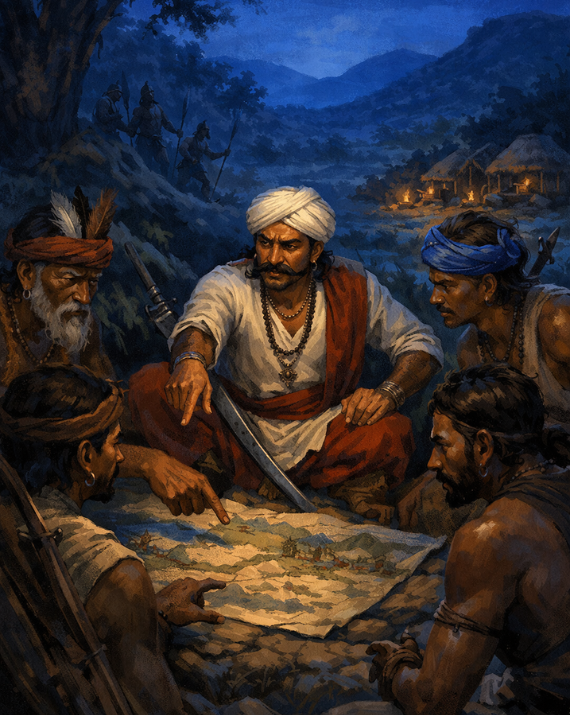
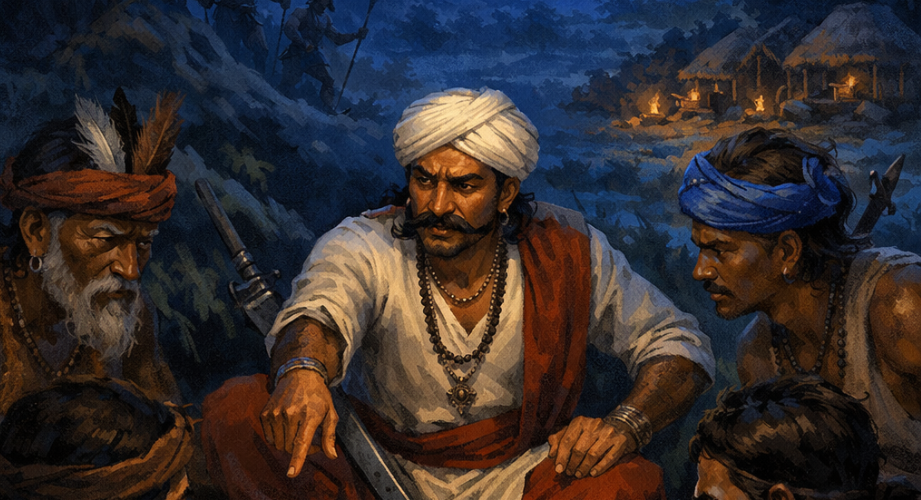
Escalating tensions between Ramji Gond and British authorities marked a decisive phase of resistance.
The conflict between Ramji Gond and British forces arose as colonial control increasingly restricted tribal autonomy and access to forests. British officials imposed regulations that ignored traditional land rights, leading to growing resentment among Gond communities. Ramji Gond emerged as a central figure opposing these measures, organizing villagers to assert their dignity and collective rights. Encounters with British representatives were often tense, reflecting deeper struggles over authority and self-rule. His resistance highlighted the clash between indigenous governance and imposed colonial systems.
As opposition intensified, British forces responded with surveillance and suppression, viewing tribal unity as a challenge to their control. Ramji Gond’s movement faced pressure, yet his leadership helped maintain morale and unity among followers. Rather than surrendering, communities adapted through resilience and strategic withdrawal when necessary. These conflicts underscored the imbalance of power while revealing the strength of organized tribal resistance. The confrontation became a defining chapter in his legacy, symbolizing courage, resistance, and the pursuit of justice under colonial rule.
Widening Influence
Impact on Tribal and Regional Uprisings
Ramji Gond’s resistance inspired wider tribal uprisings, strengthening regional unity against colonial oppression.
Ramji Gond’s movement extended beyond his immediate community, influencing neighboring tribal regions facing similar colonial pressures. His leadership demonstrated that organized resistance rooted in cultural identity could challenge imposed authority. News of his actions spread through oral communication, gatherings, and shared experiences, encouraging other tribal groups to assert their rights. Communities began recognizing the importance of unity, coordination, and collective strength. This ripple effect transformed localized resistance into a broader regional awareness, where tribal societies found renewed confidence to stand together against injustice and exploitation.
The impact of Ramji Gond’s resistance helped shape a shared spirit of defiance across tribal regions. While each uprising retained its local character, the underlying message of self-rule and dignity remained consistent. His approach emphasized resilience rather than reckless confrontation, influencing how communities responded to colonial dominance. These regional movements contributed to preserving cultural identity and resisting erasure. Over time, his influence became symbolic—representing the power of indigenous leadership and collective action. This wider impact secured Ramji Gond’s place as a catalyst for tribal unity and regional resistance.